
Case study
British Geological Survey: Hunter Douglas Timber Ceilings, Slopes and Walls
- Client
- British Geological Survey
- Location
- Keyworth, Nottinghamshire
- Duration
- TBC
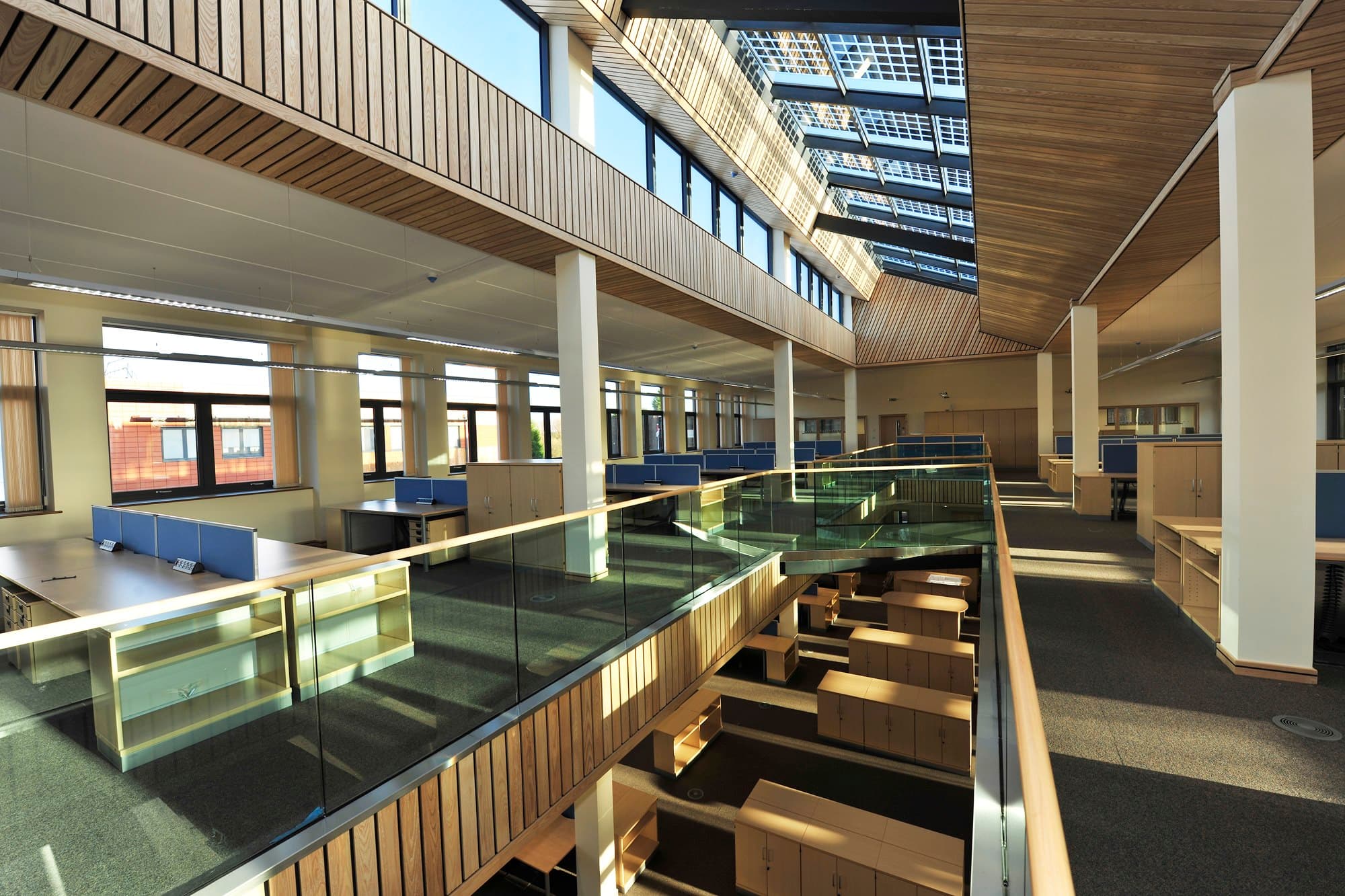
The British Geological Survey is the UK's national geological survey, a government body responsible for monitoring, mapping and researching the geological environment of the UK. The BGS is headquartered at Keyworth, Nottinghamshire, where the majority of its scientific staff, research functions and specialist collections are based. Eastledge installed the Hunter Douglas solid-wood linear ceiling system throughout the specified areas of the James Hutton Building, taking the timber through flat ceiling sections, sloping transitional planes and wall panel applications as a continuous architectural envelope.
Client
British Geological Survey
Location
Keyworth, Nottinghamshire
The brief
The James Hutton Building is a flagship facility on the Keyworth campus, named after the eighteenth-century Scottish geologist recognised as one of the founders of modern geology. The building accommodates office and research-team workspace, meeting rooms, common areas and specialist scientific functions across its floor plates.
The specification called for a Hunter Douglas solid-wood linear system applied as a continuous architectural envelope: a single material running coherently through flat ceiling sections, sloping transitional planes linking different ceiling levels, and vertical wall panels. The visual intent was that the timber would read as one material flowing through the building's interior rather than as a ceiling system, a separate slope element and a separate wall cladding.
Working in an occupied research environment placed a further set of constraints on the programme. Research teams cannot simply relocate: data sets, instruments, project continuity and long-running experiments mean that occupied scientific buildings require phase-by-phase working, with dust, noise and vibration controls calibrated to the sensitivity of the adjacent work.
What we did
Solid-wood linear system throughout
We installed the Hunter Douglas solid-wood linear system as a continuous element across the specified areas: flat ceiling sections, sloping transitional planes and wall panel applications, all in the same material, at the same module and with continuous joint alignment across each plane change.
Hunter Douglas solid-wood linear systems use timber lath profiles, in solid or engineered timber in a range of species, widths and spacing options, mounted on a concealed aluminium carrier fixed to the structural substrate. The carrier is designed to be invisible in the finished installation: what is presented to the room is a continuous sequence of timber profiles with equal-width gaps between them, the gaps revealing an acoustic backing liner, a painted reveal or the plenum above.
Where acoustic performance is part of the specification, an absorber (typically glass-wool or felt backing material) is installed behind the timber profiles, and the open gaps between laths allow sound to pass through into the absorber. Solid wood expands and contracts with changes in humidity and temperature; the module spacing and fixing detail must accommodate this movement rather than constrain it.
Continuous geometry: ceilings, slopes and walls
The requirement to take a single material through three plane orientations is an architectural decision with significant installation implications. In a standard linear ceiling installation, the carrier system runs in parallel planes at a fixed height. When the same system must transition from a horizontal ceiling into a sloping plane and then onto a vertical wall, the carrier geometry changes at each junction.
The slopes of the carrier elements change; the perimeter trim at each junction must resolve the change in plane angle without producing a visible gap, step or misalignment; and the module spacing of the timber laths must remain visually consistent as it moves from one plane to the next. Any inconsistency in joint alignment, module spacing or perimeter treatment at a plane junction reads as a seam rather than a transition.
We worked through each plane transition in the setting-out process before tools went in: establishing the carrier geometry for each orientation, the trim detail at each junction, and the sequence of installation that allowed each plane to be fixed without compromising access for the next.
How we worked
Occupied-building working practices were applied throughout. Each installation phase was planned against the building's operational schedule, with dust and noise management and daily reinstatement of areas outside the working zone coordinated with the BGS facilities and research teams. Access phases were agreed before tools went in and managed day to day against the live programme in the building.
The precision of a continuous multi-plane timber installation lies in the preparation, not the adjustment. Once a plane is installed, changes to carrier geometry or module alignment are disruptive and time-consuming. The setting-out work done in advance of installation is what allows the programme to proceed cleanly once work begins.
Outcome
The completed installation delivers the Hunter Douglas solid-wood linear system as the design specified it: a continuous timber envelope that reads coherently through ceilings, sloping transitions and walls rather than as three separately installed elements. The building achieves a warm, high-specification interior appropriate to a flagship research facility.
The occupied-environment installation was managed within the constraints of the BGS research programme, with each phase planned against the building's operational schedule.
What this project demonstrates
British Geological Survey Keyworth is one of our reference projects for higher-specification timber ceiling systems installed across complex multi-plane geometry. It demonstrates the setting-out discipline and installation capability required when a material must work continuously through ceiling, slope and wall orientations while maintaining joint and module alignment at every transition. It also demonstrates the occupied-building working practices required in a scientific research environment where the work alongside cannot be paused.
Enquiries about similar science, research or higher-specification timber ceiling projects are welcome; visit the science and research sector page for more.
Get in touch
Planning a similar project?
We work with estates teams, main contractors and designers across education, healthcare and commercial. Tell us about your brief and we'll come back quickly with a clear next step.
Related projects
More work like this
 education
Aston Students' Union: Acoustic Rafts and Timber Ceiling Refurbishment
Aston University Students' Union · Birmingham, West Midlands
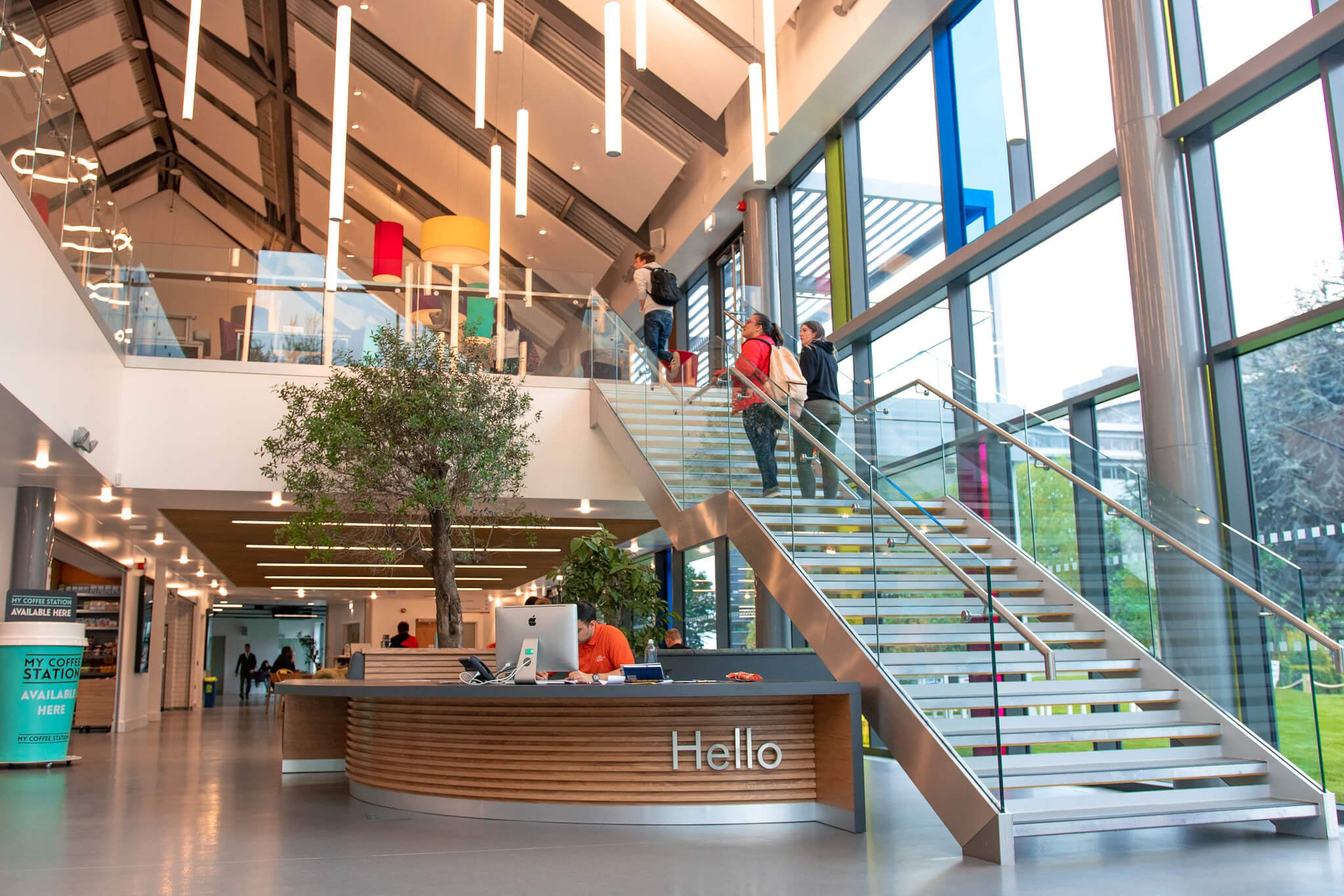
Phased refurbishment of Aston University Students' Union, Birmingham. Sloped Ecophon Solo acoustic rafts in the upper social space matched to the roof geometry; Hunter Douglas solid linear timber ceiling at ground floor. Works phased around the building's continuous student-facing operations.
View case study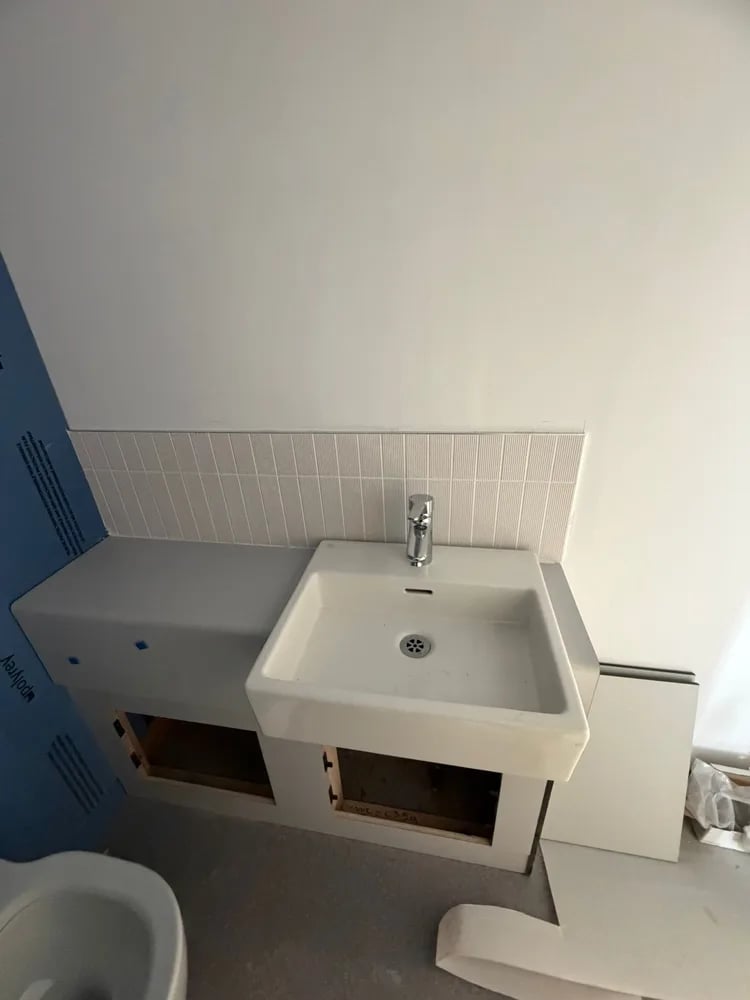 education
University of Nottingham Clinical Training Centre
University of Nottingham · University Park, Nottingham
Interior fit-out works at the University of Nottingham Clinical Training Centre: suspended ceilings, timber feature ceilings, ceramic tiling throughout washroom and wet-area environments, and TVS Acoustics acoustic rafts across the main teaching spaces.
View case study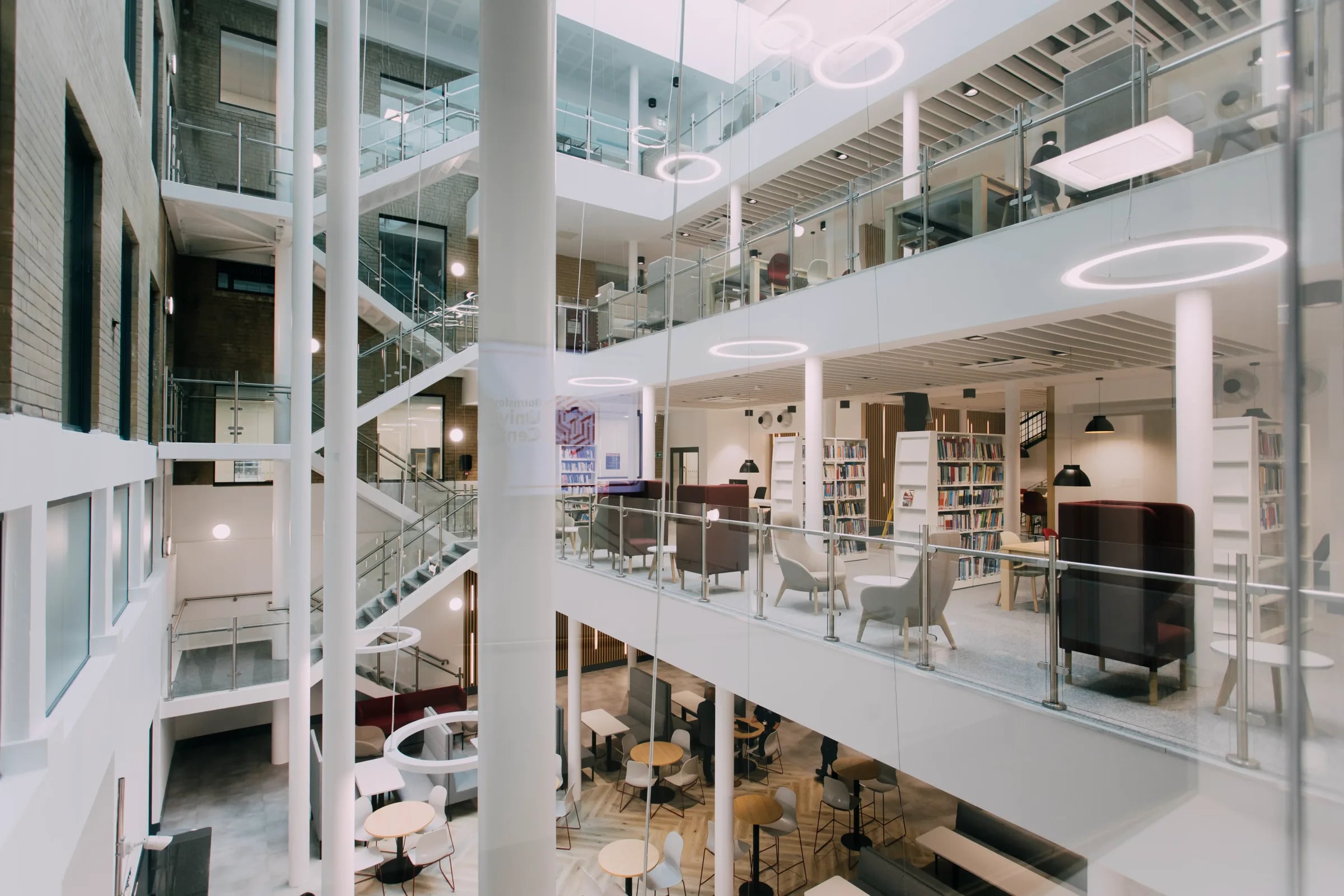 education
Barnsley College: full refurbishment across four levels
Barnsley College · Barnsley, South Yorkshire
A year-long refurbishment of four levels at Barnsley College, delivering suspended ceilings, acoustic hanging panels and a full acoustic package across classrooms, atrium and circulation spaces.
View case study
Get in touch
Looking for similar work in science & research?
Tell us about the building, the programme and your priorities. We'll come back with a clear next step within one working day.