
Sector
Science & Research fit-out specialists
Lab, clean and research environments built to specification.
Sector overview
We install ceilings, dry lining and partitions in science and research environments across the UK, working to tighter-than-standard specifications driven by ventilation, vibration, acoustic and cleanroom requirements that standard commercial fit-out does not accommodate. Research buildings, laboratories, science parks and higher-education science facilities each carry a distinct technical brief; our role is to install ceiling and wall assemblies that meet the performance specification, integrate with the building services above and around them, and hand over to a standard that survives the occupier's operational environment.
Science and research environments we work in
We install ceilings, dry lining and partitions in research buildings, university science facilities, science parks and laboratory fit-out across the UK. The work ranges from suspended ceiling installation in new-build science park shells through to refurbishment of occupied research facilities on established university campuses.
The British Geological Survey facility at Keyworth, Nottinghamshire is a representative example: a precision research environment where suspended ceiling installation coordinated with dense building services above and ran alongside BGS's operational research activities. The acoustic brief for research and write-up spaces, the ventilation integration brief for laboratory areas and the occupied-environment working protocols were each handled as distinct requirements within the same project programme.
Specification requirements in laboratory and research environments
Research buildings carry a more demanding specification than standard commercial fit-out in two areas: services integration density and acoustic performance range. Laboratory ceilings sit below supply and extract ventilation, specialist fume extract, laboratory gases, IT, lighting and fire detection; tile-by-tile access is the baseline requirement, not an upgrade. Acoustic specification varies by room type within the same building, from standard commercial tile in circulation areas to high-NRC stone wool or glass wool ceiling tile in research offices and collaborative zones.
Where the project includes vibration-sensitive laboratory spaces, ceiling and partition system selection is reviewed against the structural engineer's vibration brief; we do not introduce lightweight resonant assemblies into these zones without confirmation from the project team.
For enquiries about science, research or laboratory fit-out projects, use the form on this page or call us directly on 01332 757830.
Our approach
We work to the project specification on every science and research project, following the architect's ceiling and partition drawings, the M&E coordination drawings and the principal contractor's programme. We do not import commercial office assumptions into laboratory and research environments: services integration, penetration sealing and acoustic detailing follow the project-specific brief. Our installation record in research environments includes the British Geological Survey facility at Keyworth, Nottinghamshire, a precision research building where suspended ceiling installation ran alongside occupied-environment BGS operations and coordinated with dense M&E first-fix. We would be glad to discuss the brief for any laboratory, research building or science park project.
Our work
Science & Research projects
Sector challenges
What makes science & research interiors different
Ventilation and services integration
Research and laboratory ceilings typically carry more services per square metre than any other building type; supply and extract ventilation, specialist fume extract, laboratory gases, IT and data, lighting, fire detection and sprinklers all require tile-by-tile or panel-by-panel access across the full grid, with penetration sealing coordinated with M&E first-fix and fire-stopping from design stage.
Acoustic performance in research space
Open-plan research offices, write-up areas, quiet study zones and collaborative research floors each carry a different acoustic brief. Specification ranges from low-absorption, high-reflectance tile in general circulation to high-NRC stone wool or glass wool tile in acoustically sensitive research space. Partition assemblies between laboratory zones and occupied research offices are typically rated to Rw 45–55 dB.
Vibration-sensitive environments
Some laboratory environments, particularly those housing electron microscopes, precision measurement equipment and optical benches, are vibration-sensitive to a degree that affects ceiling and partition specification. Floating floor and isolated partition systems are outside our scope, but ceiling system selection must avoid resonant lightweight assemblies in these zones.
Occupied-environment working
University and research campus fit-out frequently runs alongside occupied teaching, research and office space. Zone-by-zone sequencing, dust containment and out-of-hours working in sensitive areas are standard practice on research campus refurbishment projects.
Featured projects
Recent science & research work
 science-and-research
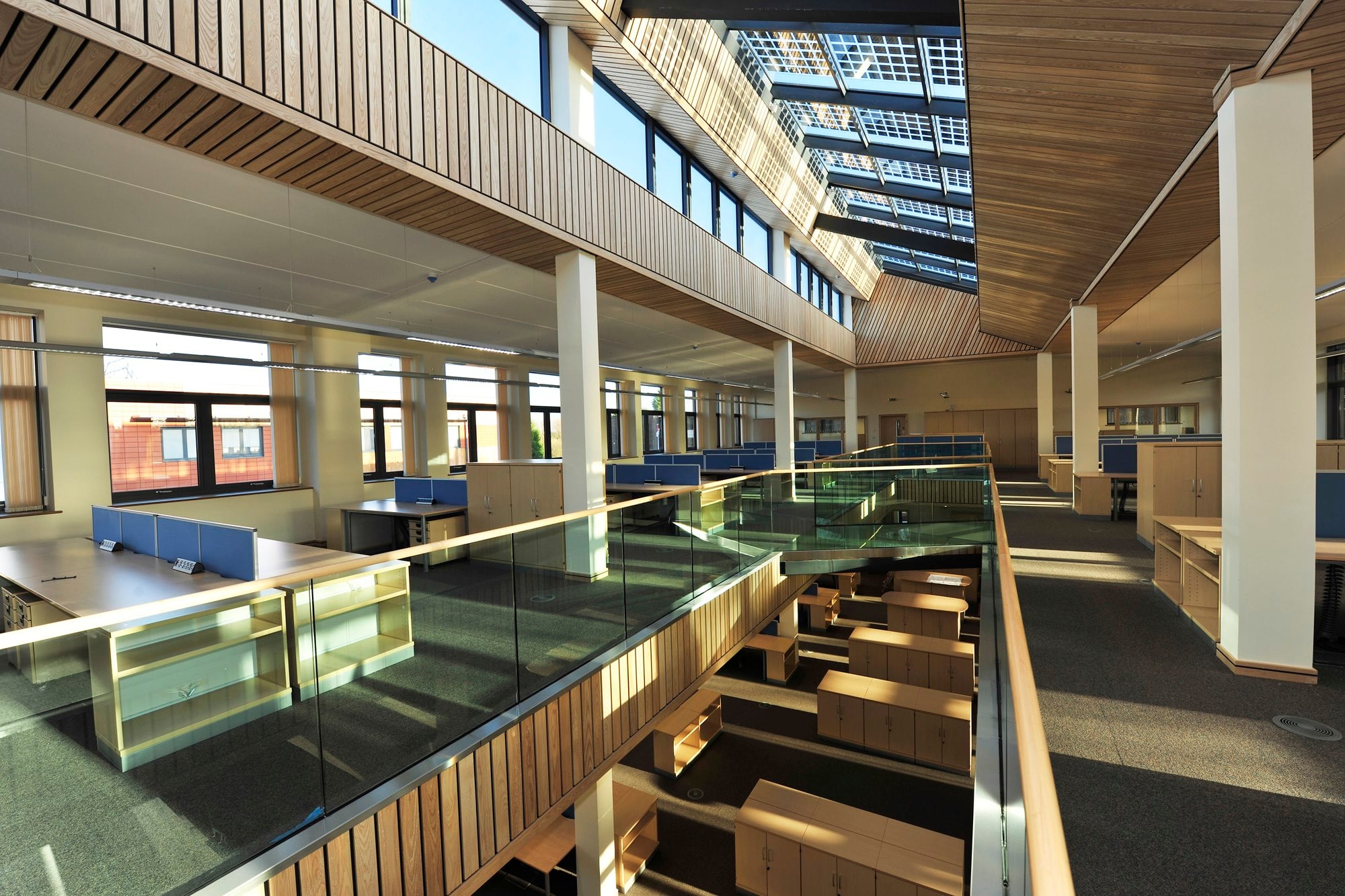
British Geological Survey: Hunter Douglas Timber Ceilings, Slopes and Walls
British Geological Survey · Keyworth, Nottinghamshire
Hunter Douglas solid-wood linear system installed as a continuous architectural envelope across ceilings, sloping transitions and wall panels within the James Hutton Building at the British Geological Survey's Keyworth campus. Works delivered around the occupied research environment.
View case study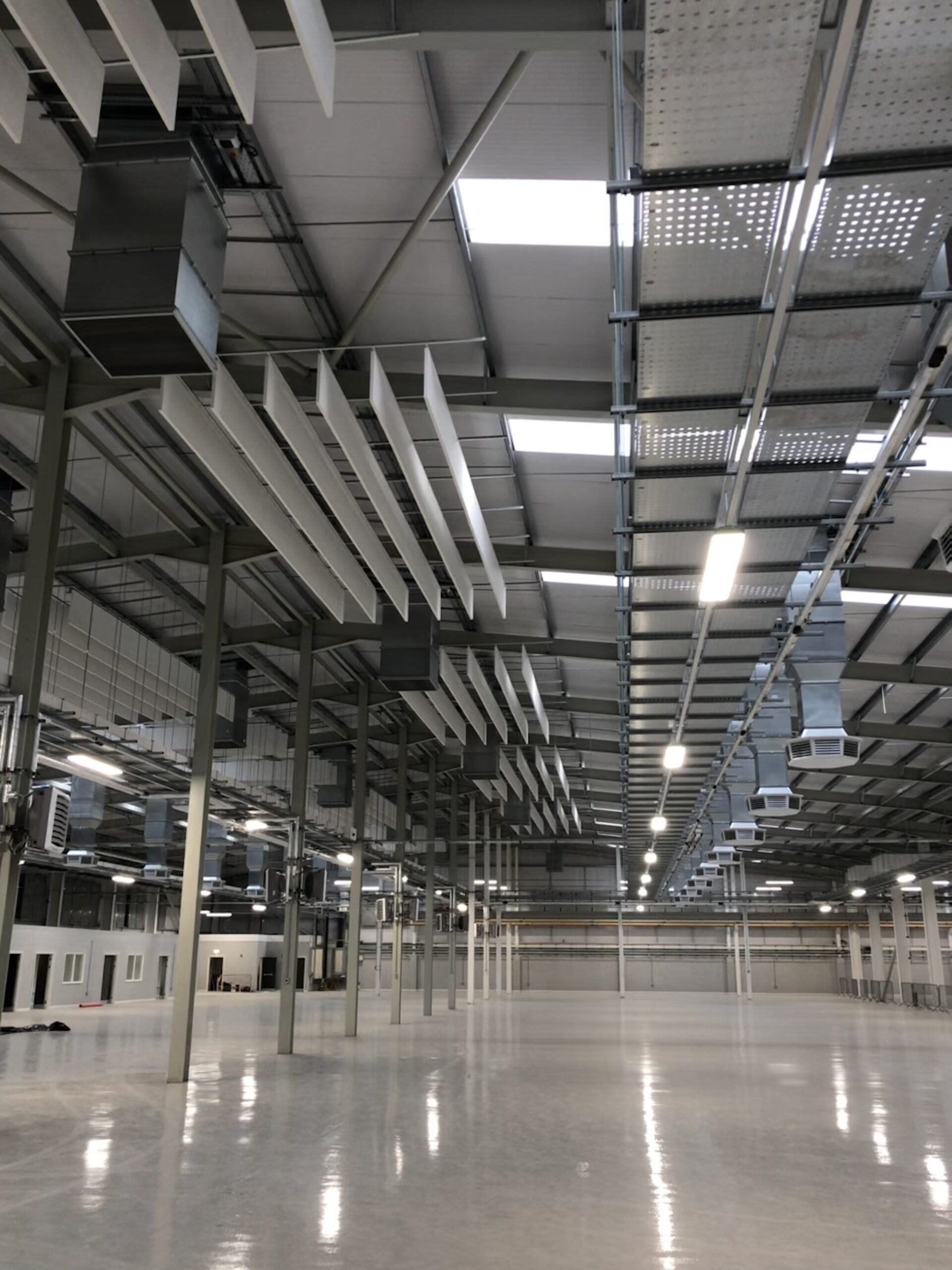 industrial
Glenair Mansfield: Office Fit-Out and Factory Acoustic Strategy
Glenair UK Ltd · Mansfield, Nottinghamshire
Combined office fit-out and factory acoustic strategy for Glenair's UK Mansfield site. Office ceilings in Zentia Ultima OP with 15 mm Silhouette grid and black reveal; over 900 Ecophon Solo baffles in the factory production hall, fitted before machinery installation.
View case study
Services we offer
Disciplines we apply for science & research clients
Suspended Ceilings
Modular grid and tile systems engineered for acoustic, fire and lighting integration.
Dry Lining
Plasterboard partitions, linings and ceilings to specification.
Partitions
Solid, glazed and demountable partitions for offices, education and healthcare.
Acoustic Panelling
Wall-mounted absorption that controls reverberation in busy commercial spaces.
Manufacturers
Systems we recommend in this sector
Get in touch
Planning a science & research project?
Tell us about the brief and the constraints. We'll come back with a clear next step quickly.