
Case study
Bentley Primary Care Centre: Hygienic Suspended Ceilings
- Client
- Bentley Primary Care Centre
- Location
- Doncaster, South Yorkshire
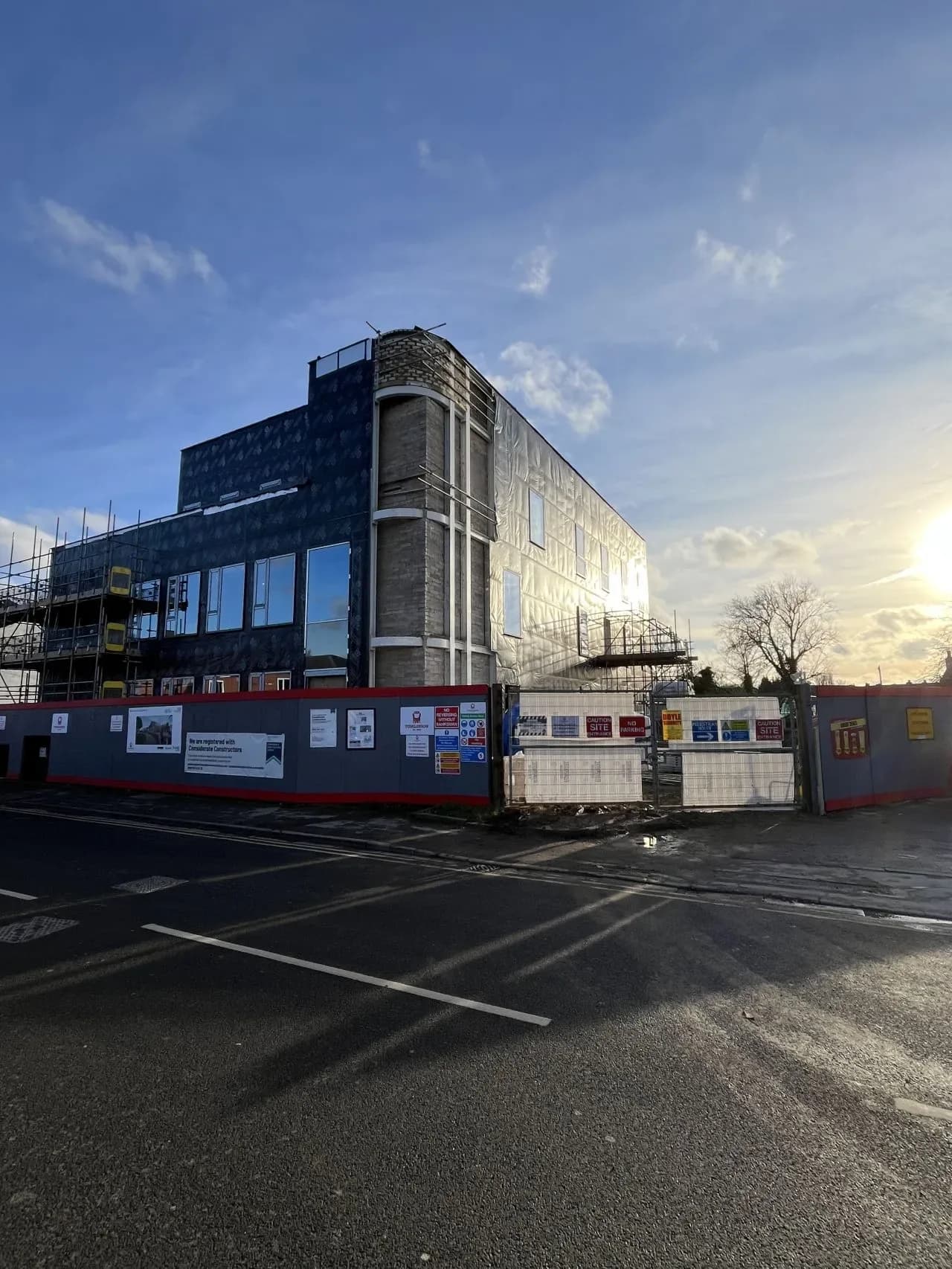
Bentley Primary Care Centre is a primary healthcare facility in Doncaster, South Yorkshire. Eastledge installed hygienic suspended ceilings throughout the clinical and consultation areas, delivering a ceiling specification that meets the environmental standards required for a CQC-regulated primary care setting. The practice remained operational throughout, with working phased around appointment schedules and dust controls applied to clinical standards.
Client
Bentley Primary Care Centre
Location
Doncaster, South Yorkshire
The brief
Primary care environments carry specific ceiling requirements that go beyond the standard commercial specification. A GP surgery or health centre is a CQC-regulated clinical setting: surface finishes must be washable, sealed at perimeters and penetrations, and free from the crevices and gaps that can harbour contamination. The ceiling tile and grid specification is part of the building's infection-control provision, and it needs to hold up to the cleaning regimes that NHS-contracted primary care facilities operate.
The brief at Bentley was to replace the existing ceiling throughout the clinical areas with a specification appropriate for primary healthcare use: a hygienic tile and grid system, properly sealed at all perimeters and service penetrations, and installed to the tolerance and finish standard that a regulated clinical environment requires. The practice needed to stay open during the works, which placed the usual constraints on access, noise and dust management.
What we did
Hygienic suspended ceiling throughout
The ceiling specification uses tiles with a washable, sealed surface finish suitable for clinical environments. Unlike standard mineral fibre tiles, hygienic tiles are designed to be cleaned with the detergent and disinfectant regimes used in healthcare settings without degrading the surface or absorbing contaminants. The tile face is non-porous and presents no open-fibre surface that could accumulate particulate.
The grid system was installed with sealed perimeter trims at all wall junctions and tight, clean integration at each services penetration through the ceiling plane. Ventilation grilles, luminaires and other services were coordinated into the grid setting-out before installation, so the finished ceiling presents a clean, uninterrupted plane without ad-hoc cut-outs or unsealed penetrations. Sealed perimeters matter in a clinical environment: any gap between the tile face and the wall or services surround is a potential site for dust and contamination accumulation that cleaning protocols cannot easily reach.
Services coordination
The ceiling installation was coordinated with the existing ventilation, lighting and other services above the ceiling plane. Grid setting-out was agreed with the services layout before the first hanger went in, allowing luminaires and ventilation positions to land cleanly within the grid module and avoiding the post-installation cutting and remedial work that misaligned services produce. In a clinical building, maintaining the integrity of the ceiling plane is not a cosmetic concern: every unplanned penetration is a potential compliance gap.
How we worked
The practice operated throughout the installation, which is standard for primary care fit-out work and one of the factors that distinguishes healthcare sector projects from vacant-building fit-outs. Patients and clinical staff were present in adjacent areas at all times, placing requirements on dust control, noise management and access that a standard commercial project does not carry.
Working around appointment schedules required coordination with the practice manager and clinical team before each phase began: access to specific rooms or corridors was confirmed at the start of each day and adjusted when the clinical programme changed. Dust extraction and containment were operated to clinical standards throughout, and each area was cleaned to the standard required before it was handed back for clinical use.
All operatives held current CSCS cards and appropriate qualifications for working in occupied clinical environments.
Outcome
A compliant, properly specified hygienic ceiling throughout the clinical and consultation areas of the practice. The finished ceiling meets the surface finish and perimeter sealing requirements that CQC environmental standards and NHS infection-control guidance require, and it is designed to hold up to the cleaning and disinfection regimes the practice operates as part of its normal clinical routine.
The installation was delivered around the practice's operational schedule without extended disruption. Primary care facilities cannot close for fit-out works in the way that vacant commercial buildings can, and delivering the project in phases that respected the clinical calendar is a standard part of Eastledge's healthcare sector approach.
Related healthcare work: healthcare sector page. More primary care and clinical environment case studies coming soon.
Get in touch
Planning a similar project?
We work with estates teams, main contractors and designers across education, healthcare and commercial. Tell us about your brief and we'll come back quickly with a clear next step.
Related projects
More work like this
 education
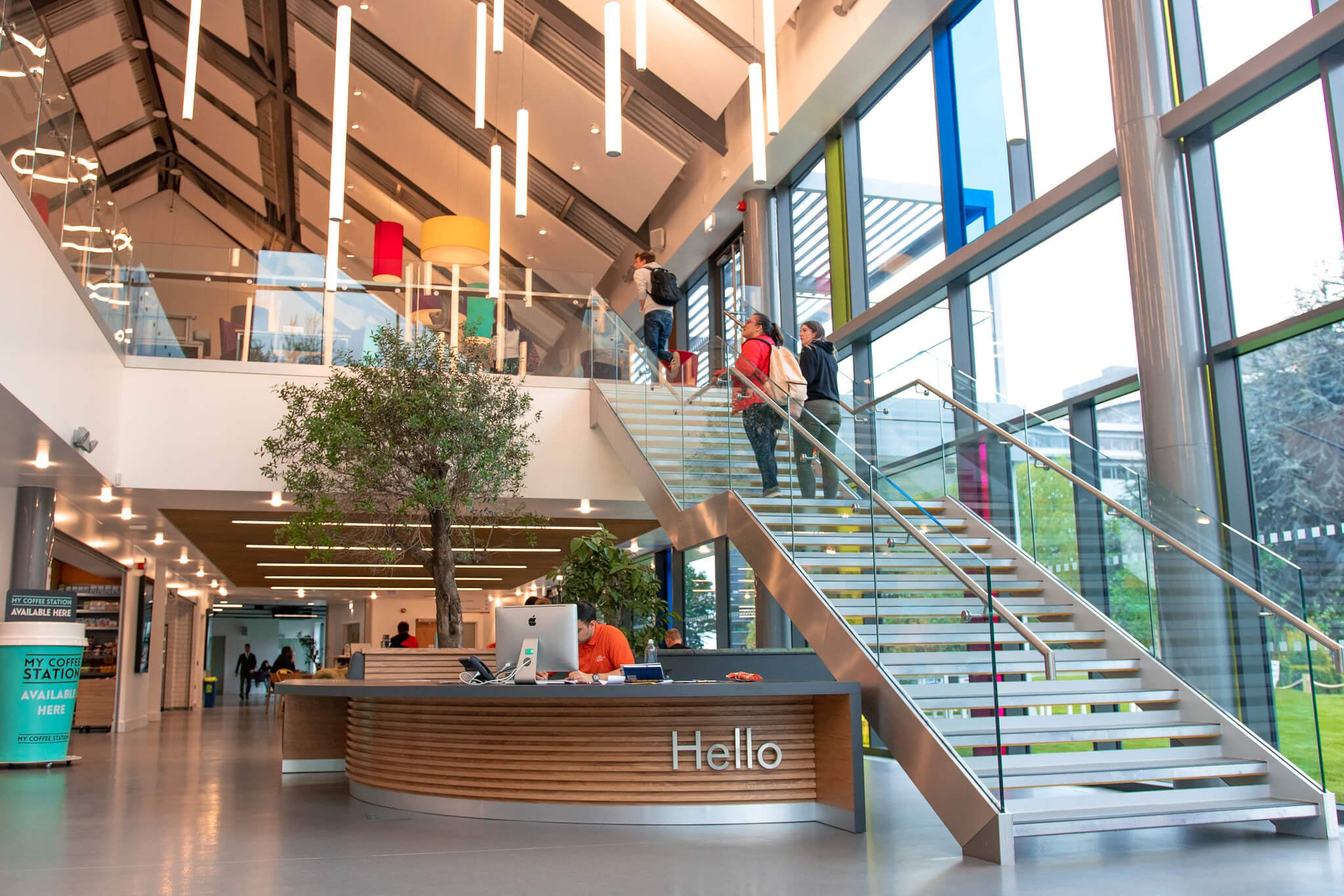
Aston Students' Union: Acoustic Rafts and Timber Ceiling Refurbishment
Aston University Students' Union · Birmingham, West Midlands
Phased refurbishment of Aston University Students' Union, Birmingham. Sloped Ecophon Solo acoustic rafts in the upper social space matched to the roof geometry; Hunter Douglas solid linear timber ceiling at ground floor. Works phased around the building's continuous student-facing operations.
View case study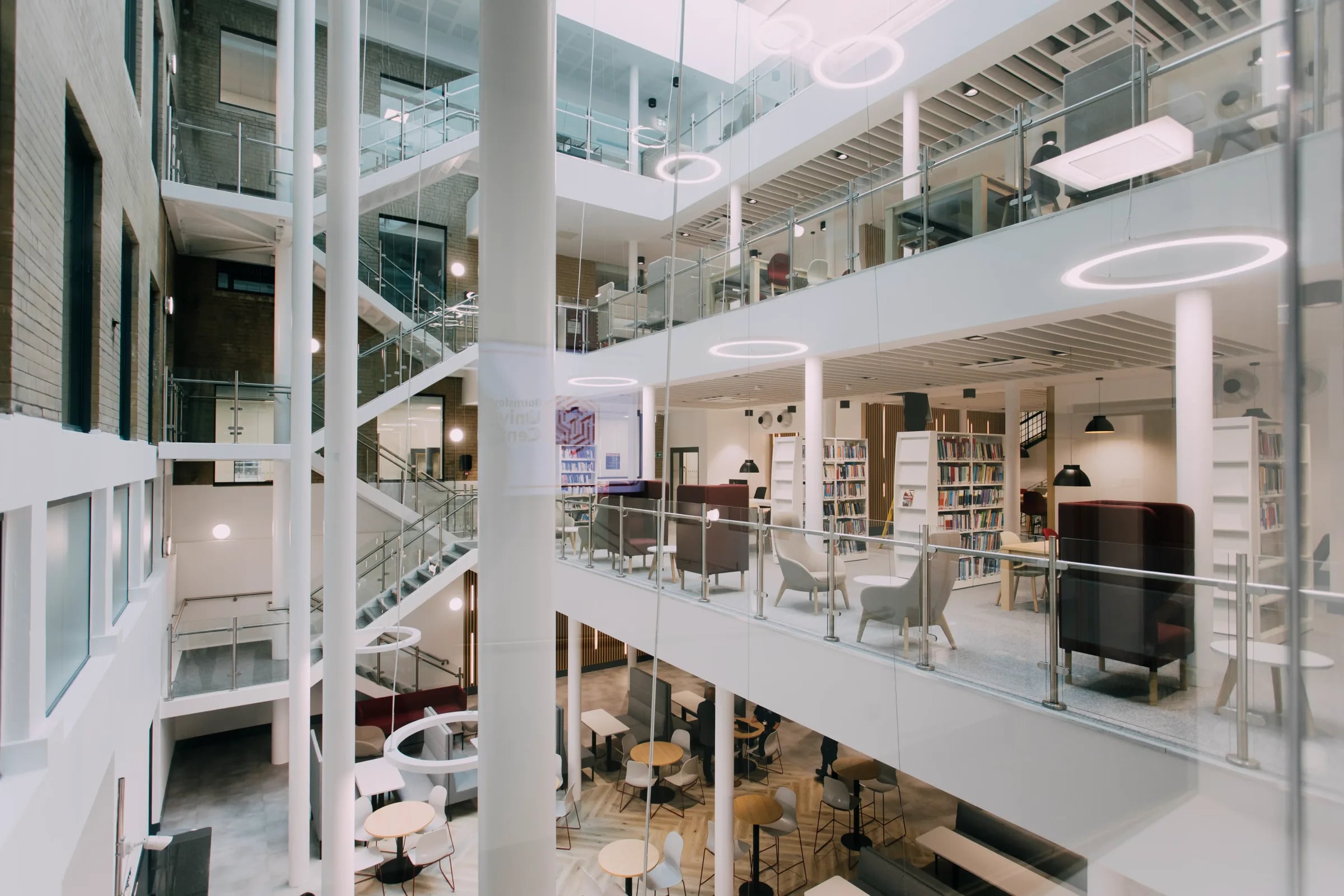 education
Barnsley College: full refurbishment across four levels
Barnsley College · Barnsley, South Yorkshire
A year-long refurbishment of four levels at Barnsley College, delivering suspended ceilings, acoustic hanging panels and a full acoustic package across classrooms, atrium and circulation spaces.
View case study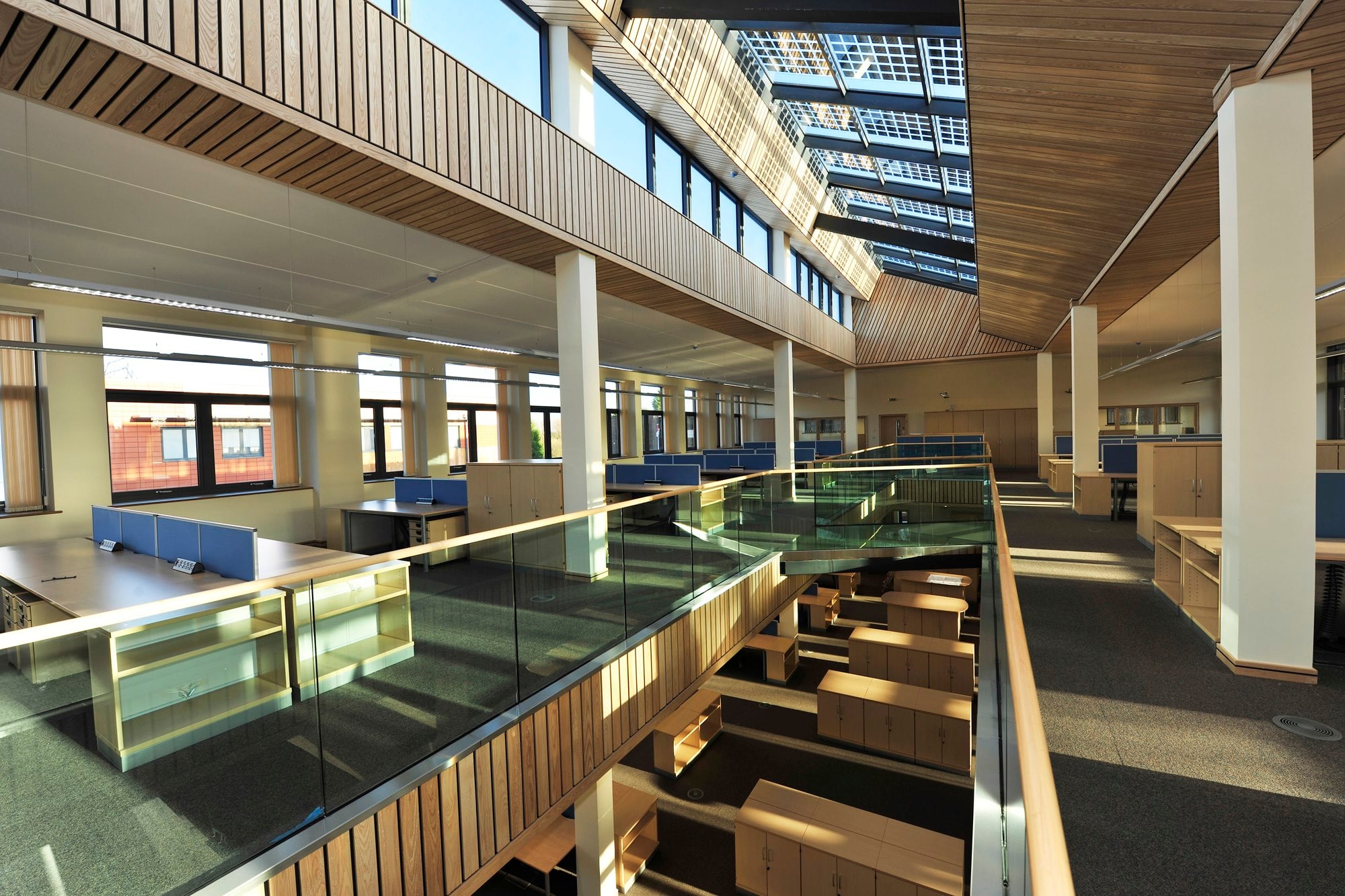 science-and-research
British Geological Survey: Hunter Douglas Timber Ceilings, Slopes and Walls
British Geological Survey · Keyworth, Nottinghamshire
Hunter Douglas solid-wood linear system installed as a continuous architectural envelope across ceilings, sloping transitions and wall panels within the James Hutton Building at the British Geological Survey's Keyworth campus. Works delivered around the occupied research environment.
View case study
Get in touch
Looking for similar work in healthcare?
Tell us about the building, the programme and your priorities. We'll come back with a clear next step within one working day.