
Service
Hygienic Cladding
Specialist hygienic wall cladding for healthcare, food production and clinical environments
What we do
We install hygienic wall cladding systems across healthcare facilities, food production environments, education catering kitchens and clinical washdown areas throughout the UK. Specialist installation of sheet PVC and HPL panel systems with chemically welded or thermoformed joints, from our Derby head office.
What is hygienic wall cladding?
Hygienic wall cladding is the specification-correct alternative to ceramic tiling in environments where infection control, food safety or chemical washdown requirements make conventional finishes unsuitable. The system uses sheet PVC or high-pressure laminate (HPL) panels fixed to the wall substrate, with joints chemically welded or thermoformed to produce a continuous, sealed, impermeable surface. The result is a wall that can be disinfected, steam-cleaned and wiped down repeatedly without surface degradation or bacterial colonisation at the joint.
Eastledge installs hygienic cladding systems across healthcare facilities, commercial and education catering kitchens, food production environments and laboratory washdown areas throughout the UK. We work alongside our dry lining and partition packages, delivering hygienic cladding as part of a coordinated fit-out scope under one site team.
What is hygienic cladding?
Sheet PVC or HPL panels are mechanically fixed to a prepared substrate (plasterboard, block, concrete or existing tile) or adhesive bonded where the surface and loading conditions allow. At junctions between panels, chemical welding or thermoforming creates a continuous sealed join with no permeable gap. At floor and ceiling junctions, sanitary trims seal the perimeter. The completed installation has no grout lines, no open joints and no ledges that trap moisture or soil.
The contrast with ceramic tiling is the key specification argument. Tiling uses grout at every joint, typically at 100 to 150 mm centres across the wall face. Grout is porous. It discolours under cleaning chemicals, traps bacteria and moisture in its surface texture, and degrades over time under high-temperature or high-chemical washdown. In clinical, food production and catering environments, the grout joint is the principal hygiene failure mode. Hygienic cladding eliminates it.
Where hygienic cladding is specified
NHS clinical areas and treatment rooms reference HTM guidance (principally HTM 60 and HTM 61 series briefs for building components in healthcare premises). Clinical walls in treatment, examination and procedure rooms require surfaces that can withstand frequent disinfection and resist bacterial colonisation. Hygienic cladding meets this brief where ceramic tiling does not.
Commercial and education catering kitchens are subject to food safety legislation requiring surfaces that are smooth, non-porous and cleanable. Commercial kitchen walls in restaurants, school and university catering facilities, hotel kitchen and servery areas, and food preparation zones require surfaces that can be cleaned to food-safe standards. Hygienic cladding is the standard specification for these environments.
Food and beverage production facilities operate under more demanding hygiene standards than commercial kitchens: production areas, washdown bays, process rooms and cold stores require surfaces that can withstand daily chemical washdown, high-pressure hose cleaning and steam cleaning without surface failure. Hygienic cladding with chemical-weld joints is standard in these environments.
Dental and veterinary clinical rooms require sealed, cleanable surfaces in treatment areas where cross-contamination risk is a regulatory and clinical concern. Hygienic cladding is the practical choice for treatment room walls where ceramic tiling would require grout replacement within the asset life of the fit-out.
Leisure facility changing and wet-side areas including swimming pools and sports facility changing rooms require surfaces that resist persistent moisture, cleaning chemicals and high-humidity environments. Hygienic cladding outperforms ceramic tiling in these settings because it eliminates the wet-side grout failures that typically drive early refurbishment.
Systems we install

Altro Whiterock and Altro Fortis are the market reference products for healthcare and food production environments and we are familiar with their specification and installation requirements. Altro products are high-quality and widely specified by NHS and food production clients who have standardised on the brand.
Our primary offer, however, is around cost-effective alternatives that meet the same hygiene performance standards. Bioclad, IPS HygiClad and similar specialist hygienic cladding systems from UK manufacturers deliver the same sealed, washable, bacteria-resistant performance at a lower installed cost. For many clients, particularly in education and commercial catering, a cost-effective alternative to the premium brand is the practical specification choice. We discuss system selection at the specification stage and recommend the product that best matches the hygiene brief, the fire rating requirement and the client's budget.
Installation specifics
Substrate preparation is the first critical step. The wall must be sound, flat and free of contamination before panels are fixed. On plasterboard substrates this means a correctly taped and jointed face; on masonry substrates it may require a render or plasterboard lining first. We assess the substrate at survey and specify the preparation required before pricing the cladding.
Panel fixing follows the system manufacturer's method, either mechanical fixing through the panel face into the substrate framing or adhesive bond where the substrate and load conditions allow. Mechanical fixing is preferred in high-washdown environments because adhesive bond can be undermined by repeated moisture ingress at panel edges if the perimeter sealing fails.
Joints between panels use chemical welding (solvent applied to both panel edges, pressed together and cured) or thermoformed profiles (heat-formed returns and corners). Perimeter trims at the floor and ceiling junction use sanitary-profile coved or square-edged trims sealed to the panel face and the floor/ceiling surface, eliminating the junction gap where moisture and soil typically accumulate at tiled walls.
Compliance
Reaction-to-fire classification for hygienic cladding systems is required in NHS and education environments and is typically specified in the project brief. Most PVC systems achieve Class 1 surface spread of flame under BS 476 Part 7 or Euroclass B-s1, d0 equivalent under EN 13501-1. We confirm the fire classification for each product against the building's fire strategy and the specification before procurement.
In food production environments, surface cleanability and non-toxicity under food contact regulations apply to adhesive products and sealants used in the installation. We specify cleaning-stable, food-contact-approved adhesives and sealants where the brief requires it.
Sectors served
Healthcare, food and beverage production, education and university catering, leisure and sports facility changing areas, and commercial kitchens in hospitality, retail and food service environments.
Recent work
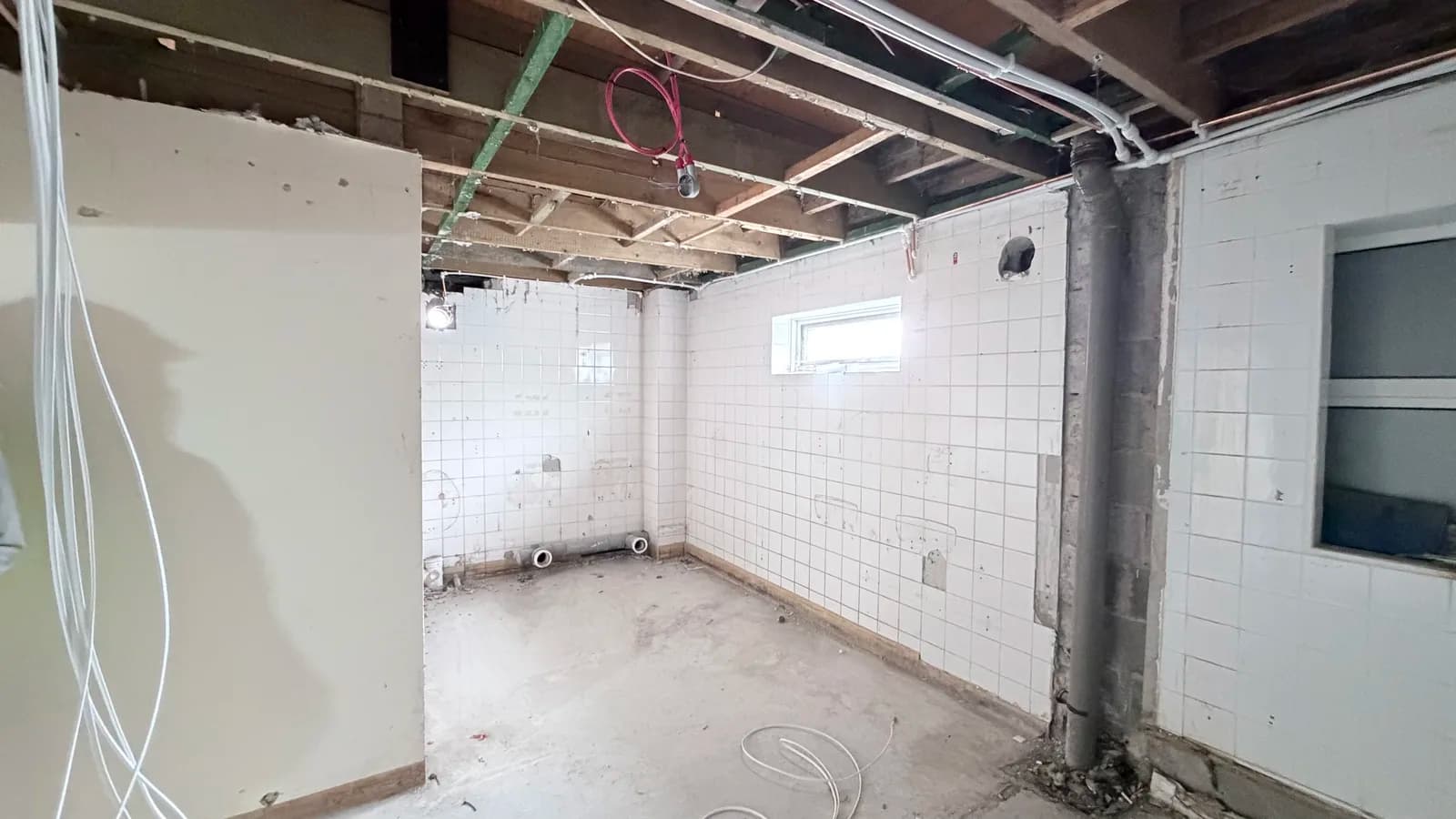
We have recently completed hygienic cladding installation in Liverpool as part of a wider fit-out package. A detailed case study with photography is in preparation for this project. Please contact us directly for project references in hygienic cladding, particularly for NHS or food production environments where confidentiality requirements prevent public case study publication.
Cities we serve
We install hygienic wall cladding across the UK from our Derby head office. Follow the link below for coverage detail and recent work in this location.
Hygienic cladding in Liverpool
Get in touch
If you are specifying hygienic wall cladding for a healthcare, catering, food production or clinical environment, we would be glad to discuss the system options and the installation scope. Send drawings, the hygiene brief or a few site photos with the form on this page and we will come back with a clear next step quickly. For urgent enquiries call 01332 757830 or email enquiries@eastledge.co.uk.
Our work
Hygienic Cladding projects
Why Eastledge
What you can expect
Sealed, washdown-ready joints
Thermoformed or chemical-weld joints eliminate the grout lines and permeability that make ceramic tiling unsuitable for high-hygiene environments.
Cost-effective system selection
We install cost-effective PVC cladding alternatives that meet the same hygiene standards as premium market leaders, allowing clients to specify to performance rather than brand.
Integrated with our dry lining package
Hygienic cladding sequenced with our partition and lining work under one site team, reducing coordination and handover risk.
Direct labour, in-house programming
Our own time-served operatives and supervisors, not rotated subcontracted teams.
National coverage from the Midlands
Crews mobilised from our Derby HQ delivering hygienic cladding across England, Wales, Scotland and Northern Ireland.
Forty years of fit-out experience
Established 1986, delivering specialist commercial interior trades to healthcare, education, leisure and food production sectors.
Featured projects
Selected work using this service
 industrial
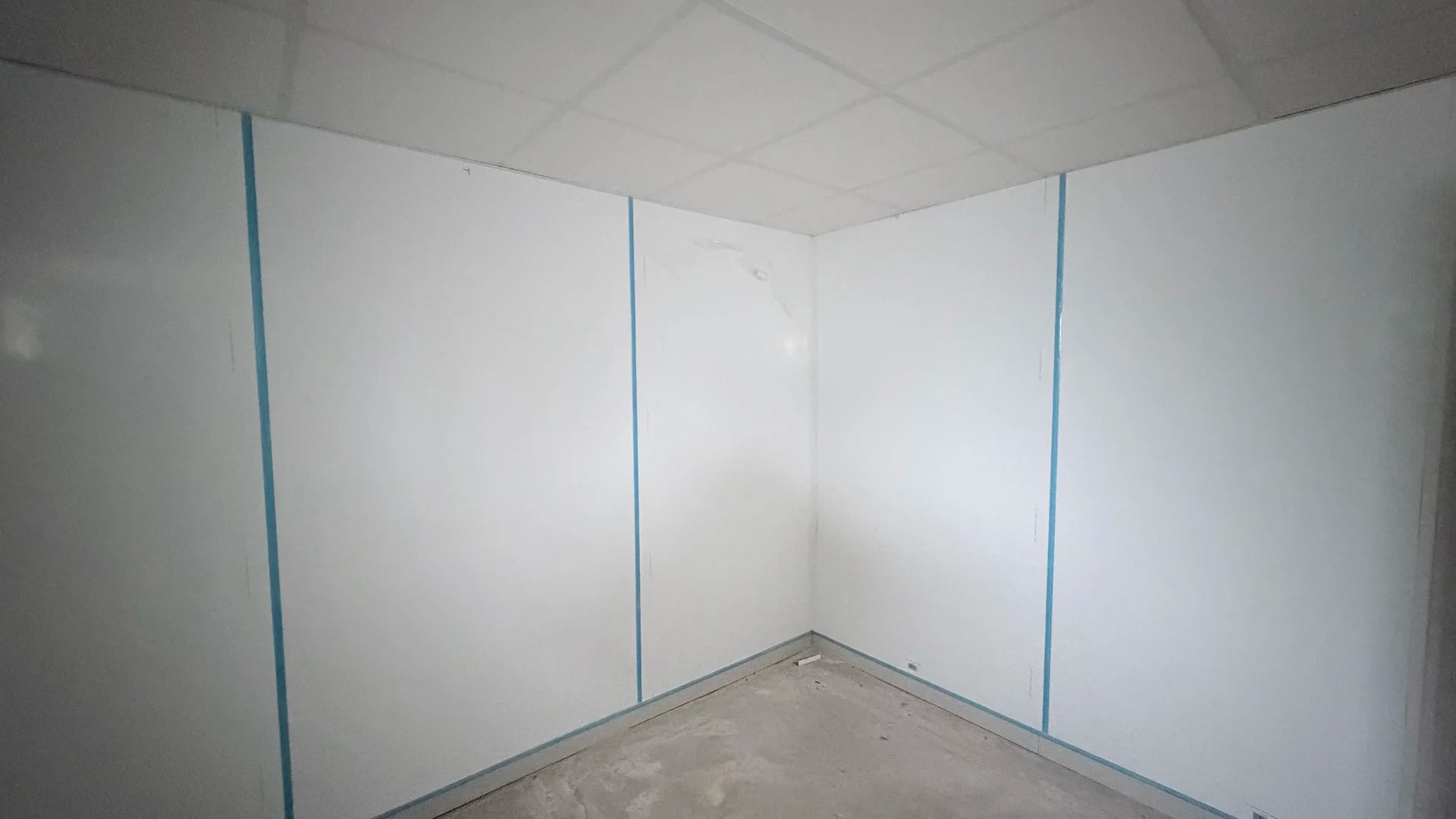
FCC Environment: hygienic cladding and suspended ceilings
FCC Environment · Manchester
Five specialist trades delivered under Sail Construction at an FCC Environment waste management facility: dry lining, taping and jointing, glazed partitions, suspended ceilings and hygienic wall cladding across both operational and welfare areas.
View case study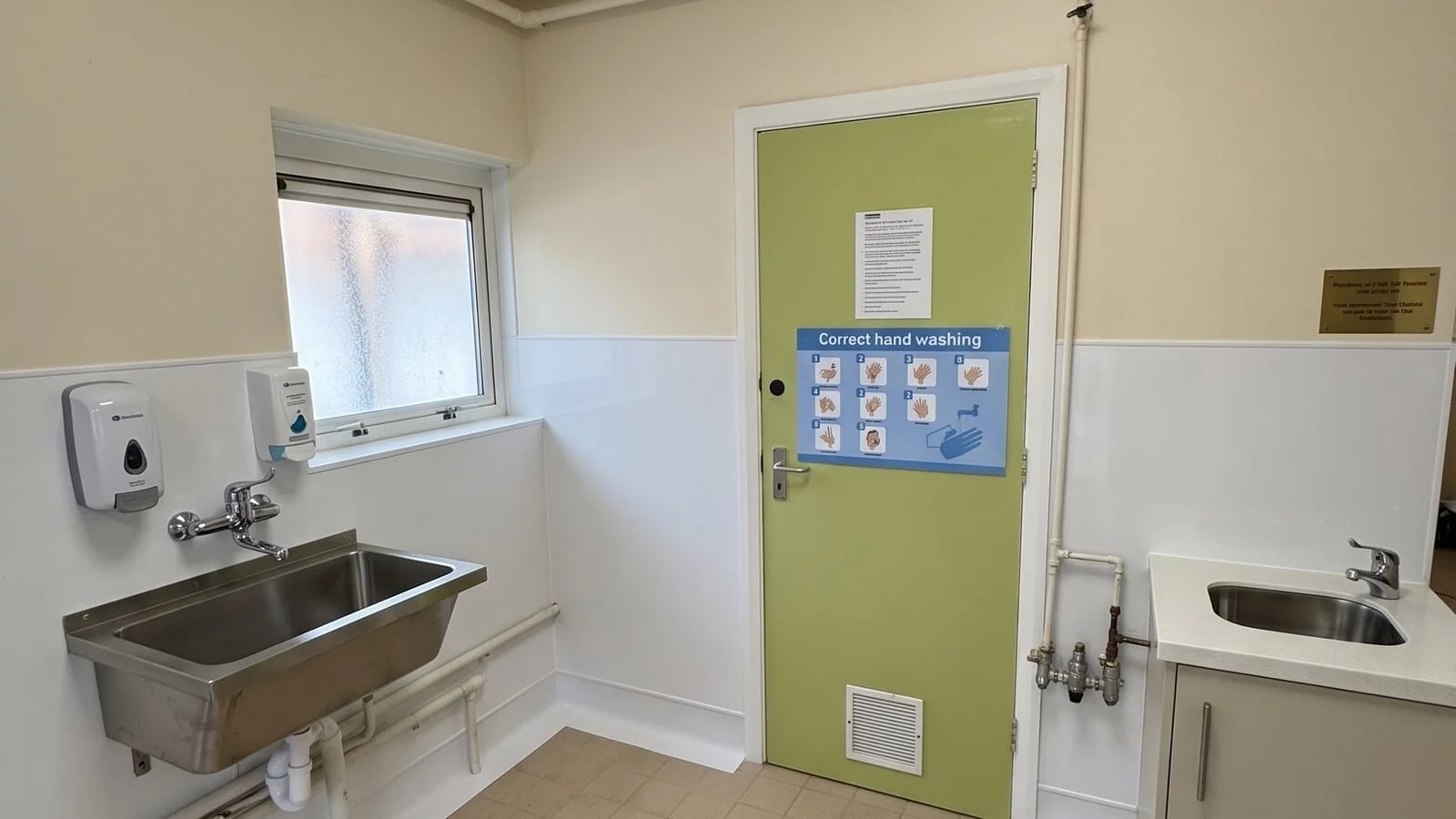 education
Our Lady of Perpetual Succour Catholic Primary School, Coventry
Our Lady of Perpetual Succour Catholic Primary School · Coventry
Hygienic wall cladding and suspended ceiling installation at Our Lady of Perpetual Succour Catholic Primary School in Coventry.
View case study
Manufacturer partners
We install systems from
Sectors we serve
Hygienic Cladding for these environments
Where we work
Hygienic Cladding across the UK
We deliver this service nationwide. Browse city-specific information for our priority regions.
FAQs
Frequently asked questions
Related services
You may also need
Get in touch
Specify hygienic wall cladding for your next commercial project
Send drawings, the hygiene brief or a few site photos and we will come back with a clear next step quickly.